When Reform Outran the Vote: A 15-Unit Building Becomes Pittsburgh's Test Case
In Lawrenceville, a developer plans to build 15 apartments on a 3,300-square-foot lot on 49th Street, next to Stinky's Bar and across from the Locomotive Lofts. It's tiny by headline-making standards, yet it now faces a formal protest before Pittsburgh's Zoning Board of Adjustment, backed by a neighborhood attorney, a petition signed by more than 40 residents and businesses, and a 45-day decision clock. The trigger was not height or density, but the zoning administrator's decision to waive the parking requirement entirely, citing a reform ordinance the City Council has not yet passed.
That detail is the whole story, and almost everyone is stepping over it.
Here's what most people miss. On the surface, this is a parking fight: neighbors worry about cars, while the developer offers bike-share memberships instead of parking spaces. But parking is only the container. The reform package, which eliminates parking minimums, legalizes accessory dwelling units by right, and makes affordable housing incentive-based, won unanimous Planning Commission support in early June. It now returns to Council for a vote not expected until after the August recess. The administrator applied the logic of a proposed rule. The legislative branch has not acted; the administrative branch has.
For a developer, that gap is dangerous because it looks like a shortcut.
Administrative discretion is an attack surface, not a safe harbor. When an administrator grants an exception grounded in pending legislation, she makes a judgment call that a court can second-guess. That is what happened here. Opponents did not have to win the parking policy argument; they only had to show that the administrator exceeded the law in justifying this approval. A “by-right” approval feels certain. But when it depends on an unenacted rule, that certainty is provisional, and provisional entitlements invite litigation.
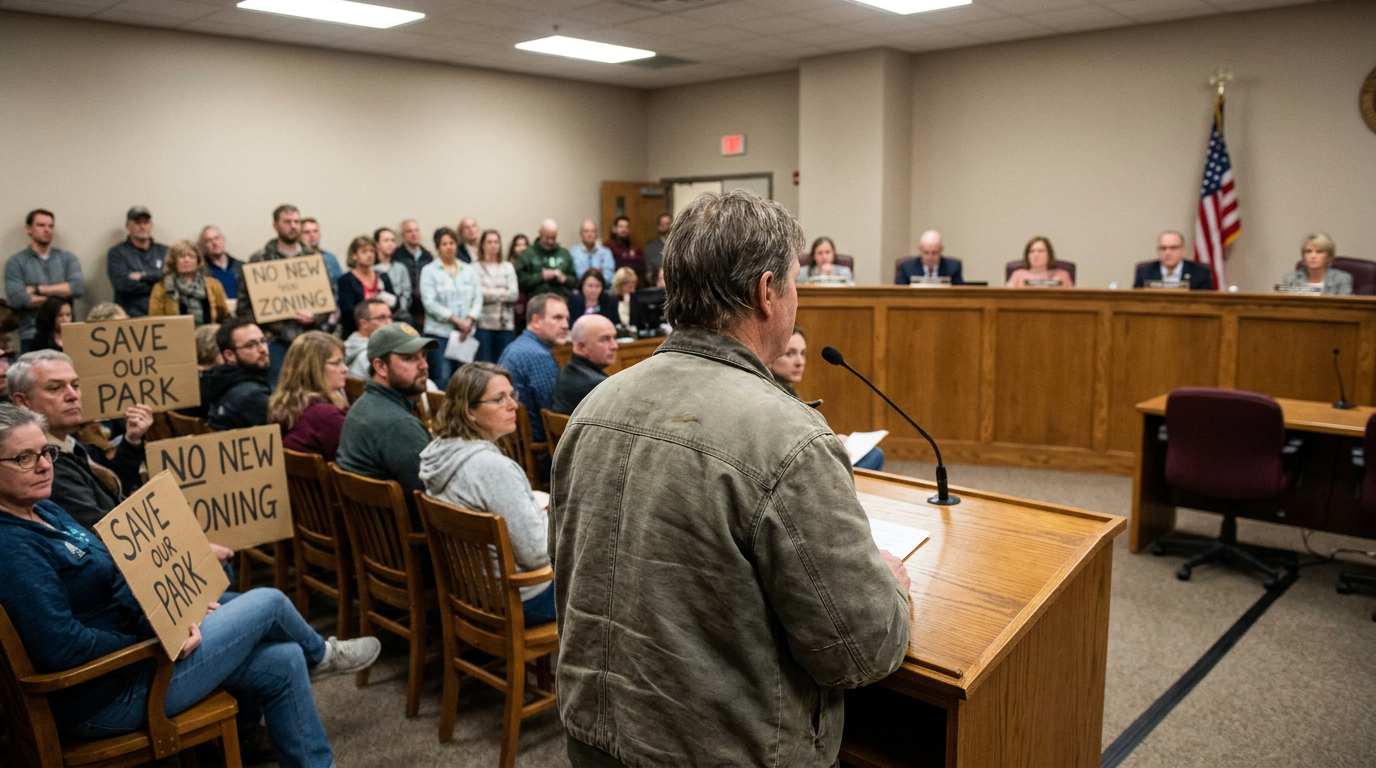
Parking was the only objection that could be raised about the project. The neighbors' grievance is broader than five spaces: the project arrived through an administrative exception that bypassed normal community development review. “We weren't consulted” is a real feeling, but not an appealable one. “The administrator misapplied the parking standard” is. The process complaint was poured into the one vessel carrying legal weight at the ZBA. The stated objection is rarely the whole objection; it is the one that has standing. Miss that, and you litigate parking counts while the real driver (a community that felt bypassed) hardens.
Reform didn't end the parking fight. It privatized it. Removing the requirement lifts the developer's obligation to provide parking. It does not remove the grievance. The street remains just as crowded. Reform shifts the burden from the code to the developer. Under the old regime, you built the required spaces, and the fight never started. Under the new one, you must persuade a skeptical room that bike-share and transit can substitute for cars, while “there is no parking” remains emotionally unbeatable and endlessly repeatable. The city changed the rule, not the street. That negotiation is now yours.

Approval was the midpoint, not the finish line. The exception opened a 45-day appeal window that may expire before Council votes on the ordinance. A zoning board could rule on the project before the new rule takes effect. Whatever the outcome, the developer now carries schedule risk, legal costs, and reputational friction into a neighborhood where it will operate for decades. The permit was not the destination but the ticket to the next phase of exposure.
So what should a project sponsor do?
First, treat “pending” as a red flag, not a green light. If an entitlement depends on an unenacted rule, price the timing risk honestly. An approval that outpaces legislation may be financeable on paper but fragile in practice. The cheapest and most durable paths are often different.
Second, don't let a procedural shortcut replace the political work. The exception was legally available but bypassed community review, a missing step opponents turned into a legitimacy argument. When the process does not require neighborhood engagement, that engagement is most valuable. A developer who convenes neighbors controls the narrative. One seen as avoiding them inherits a story it cannot rewrite.
Third, identify the real objection before building the record. If parking is the appealable proxy for a deeper grievance, answering only parking means fighting the wrong battle. Identify what the objection stands for and address it with the technical case. The proxy is litigated at the hearing; the real issue is resolved in the neighborhood. You need to win in both venues; only one runs on a 45-day clock.
None of this argues against parking reform, denser housing, or speed. Pittsburgh needs housing. Occupancy is above 90%, and small infill projects like this are what a healthy market should produce. The lesson is narrower and concerns sequencing: when the tools of approval move faster than the politics of approval, the developer inherits the gap. A 15-unit building in Lawrenceville is about to show an entire city what that gap costs. It is worth watching and planning for before you are the one being watched.