Share this article

21 July 2026

The Quiet Approval Is the Expensive One

BP's Lightsource bp is moving its Big Bronco solar-and-storage project forward in Adams County, Colorado. The project totals roughly 300 megawatts of solar paired with 300 megawatts of battery storage and is backed by a reported $675 million in private investment. Public figures estimate $39 million in new local tax revenue and about 400 jobs at peak construction. By most accounts, it has been a smooth ride: willing landowners, a site that steers clear of sensitive areas, and little of the organized community opposition that stalls so many energy projects.

Read casually, it's just another big solar farm getting built. Read the way we read these things, it's a case study in how projects actually get approved.

“Uncontested” is not inherited

A project that looks this easy is almost never easy. “Uncontested” is not a condition a developer inherits; it's an outcome they manufacture. Every box Big Bronco quietly checks is a box where energy projects normally lose.

Private funding neutralizes the first and loudest attack in almost every energy fight: who's really paying for this. Careful siting, away from sensitive habitat, prime viewsheds, and the parcels neighbors care most about, removes the environmental coalition's easiest hook. Landowner buy-in kills the “outsiders imposing on our community” narrative that supplies most of the emotional fuel for NIMBY campaigns. And pre-committing real dollars to local schools and county services does something subtle but decisive: it creates a constituency with something to lose if the project dies.

Opposition organizes around grievance

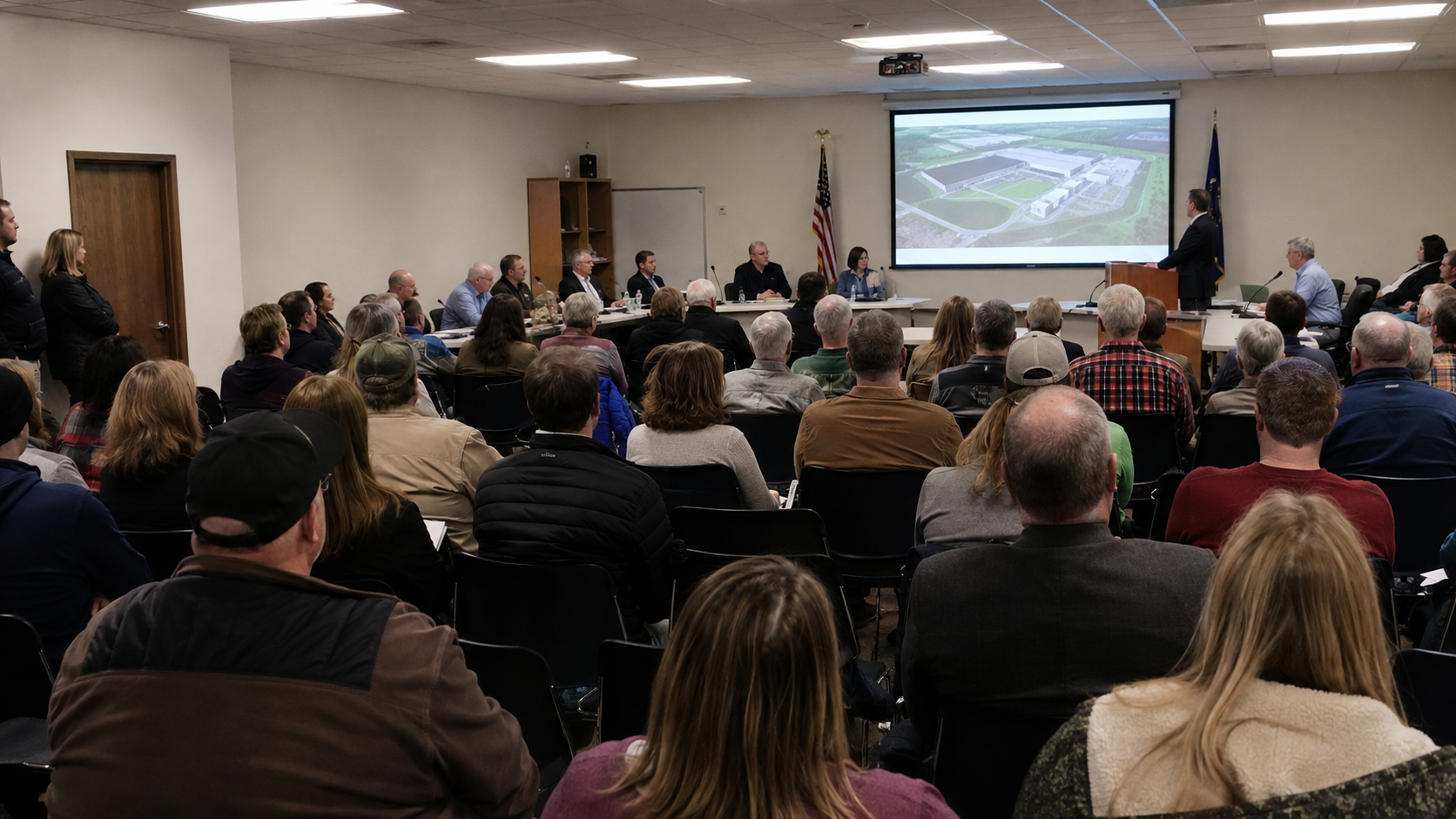
After thirty years of this work, we can tell you what opposition actually needs to get off the ground: a grievance and a villain. A packed, hostile hearing room is rarely the start of a fight; it's the visible end of one that's been building for months. Remove the grievances early, and there's nothing for an opponent to organize around. No villain, no rallying cry, no email list.

There's a corollary that developers consistently underestimate: support is silent by default. The neighbors who are fine with your project, or even glad for the tax base and the jobs, have no reason to spend a Tuesday night at a public hearing. Opponents always do. So an unmanaged process doesn't produce neutral turnout; it produces a lopsided one, where the three loudest objectors sound like the entire community. Manufacturing a clean approval means giving your quiet supporters a reason and a way to be counted, so the public record reflects reality rather than just the anger in the room.

That's why the Big Bronco hearing looks boring. The real work happened long before it, off-camera, one conversation at a time, in living rooms and county offices. What looks like a lack of strategy is the strategy.

Don't learn the wrong lesson

There's a trap in a story this clean, and it's worth naming. It's tempting to conclude that “solar in rural and Front Range counties is easy now.” It isn't. Adams County and the surrounding counties are precisely where the next generation of land-use fights is heating up: farmland-preservation ordinances, glare and viewshed complaints, decommissioning-bond demands, and moratoria that land on a planning commission agenda with almost no warning.

Big Bronco is a template, not a guarantee. The developers who assume the next project will glide through as this one did are the same ones who skip the pre-work and end up in a packed hearing room, wondering what went wrong.

What a developer should actually do

If you're planning a solar, storage, or other energy project where local sentiment could decide your fate, treat the quiet approval as something you build, not something you hope for:

  • Map the grievance landscape before you file, not after. Know who is likely to object, and why, while you can still design around it.
  • Lock in landowner and adjacent-neighbor alignment early. The parcels next to your site often matter as much as the one you're leasing.
  • Pre-load the benefit story with a real constituency. Jobs, tax revenue, and school funding only protect you if the beneficiaries hear it from you before they hear the objections from someone else.
  • Site defensively. Distance from sensitive and highly visible land is almost always cheaper than fighting a coalition you could have avoided.
  • Show up in the community before there's a hearing to show up to. Relationships built under pressure are worth a fraction of the ones built early.

None of this is glamorous, and none of it makes the news. That's exactly the point. The quiet approval isn't the cheap outcome; it's the expensive one. You pay for it up front, in disciplined pre-entitlement work, rather than paying for it later through delay, litigation, and stranded capital.

The bottom line

Every project that never makes the headlines represents a fight won before it even started. If you're considering a site where community sentiment or local politics could make or break your timeline, that is the work we do. The best time to start is before anyone has a reason to oppose you.

Recent Posts

by Land Use Strategies 7 July 2026
In Central Oregon, the Deschutes River lives two lives. The stretch through Bend looks healthy. A mile or two downstream, roughly ninety percent of it vanishes into pipes and canals. A recent investigation by OPB and ProPublica followed the water to determine where it goes and who benefits.

Row of brick townhouses along a quiet street with parked cars and a vacant lot at the end
by Land Use Strategies 2 July 2026
In Lawrenceville, a developer plans to build 15 apartments on a 3,300-square-foot lot on 49th Street, next to Stinky's Bar and across from the Locomotive Lofts. It's tiny by headline-making standards, yet it now faces a formal protest before Pittsburgh's Zoning Board of Adjustment, backed by a neighborhood attorney, a
by Land Use Strategies 24 June 2026
What Arizona’s development battles reveal about the opposition every developer is about to face.
Partially built concrete building on a construction site under cloudy skies, with city buildings nearby
by Land Use Strategies 15 June 2026
The Denver demolition debate isn’t really about wrecking balls. It’s about who bears the political risk of a vacant lot, and that’s a question developers must answer before the first permit.
by Land Use Strategies 10 June 2026
Arizona’s Senate has advanced a bill that would let small modular nuclear reactors be sited next to data centers and on retired coal sites across the state’s rural counties.
by Land Use Strategies 5 June 2026
Across the country, data center developers are learning a hard lesson the rest of the land use world internalized decades ago.
by Land Use Strategies 2 June 2026
This spring, Lakewood voters did something developers should not ignore: they repealed the city's first major zoning overhaul in more than a decade.