Share this article

26 August 2026

Zoned by the Parcel, Flown by the Radius

THE LUS TAKE | Drone Delivery & Zoning

A Richardson, Texas, homeowner stood at a council microphone in February and reported 122 Amazon delivery drones over her house in a single ten-hour period, roughly one every five minutes (Zeff, "Richardson Residents"). By April, the council that had approved the facility on a four-to-three vote met in executive session to ask whether it could withdraw its approval. The answer was no. The zoning was valid, and the legal exposure of undoing it was too great. The city manager advised residents to complain to the FAA and to their members of Congress (Zeff, "Richardson City Council").


That sequence is about to go national. Amazon plans to offer drone delivery in nearly 500 cities and towns by year-end, a sixfold expansion, with an internal target of one million deliveries (Palmer). Each site serves a 7.5-mile radius (Amazon).

The mismatch nobody is naming

The usual critique is that municipal codes lack a definition for a drone hub. True, and a few cities are fixing it. That framing understates the problem.


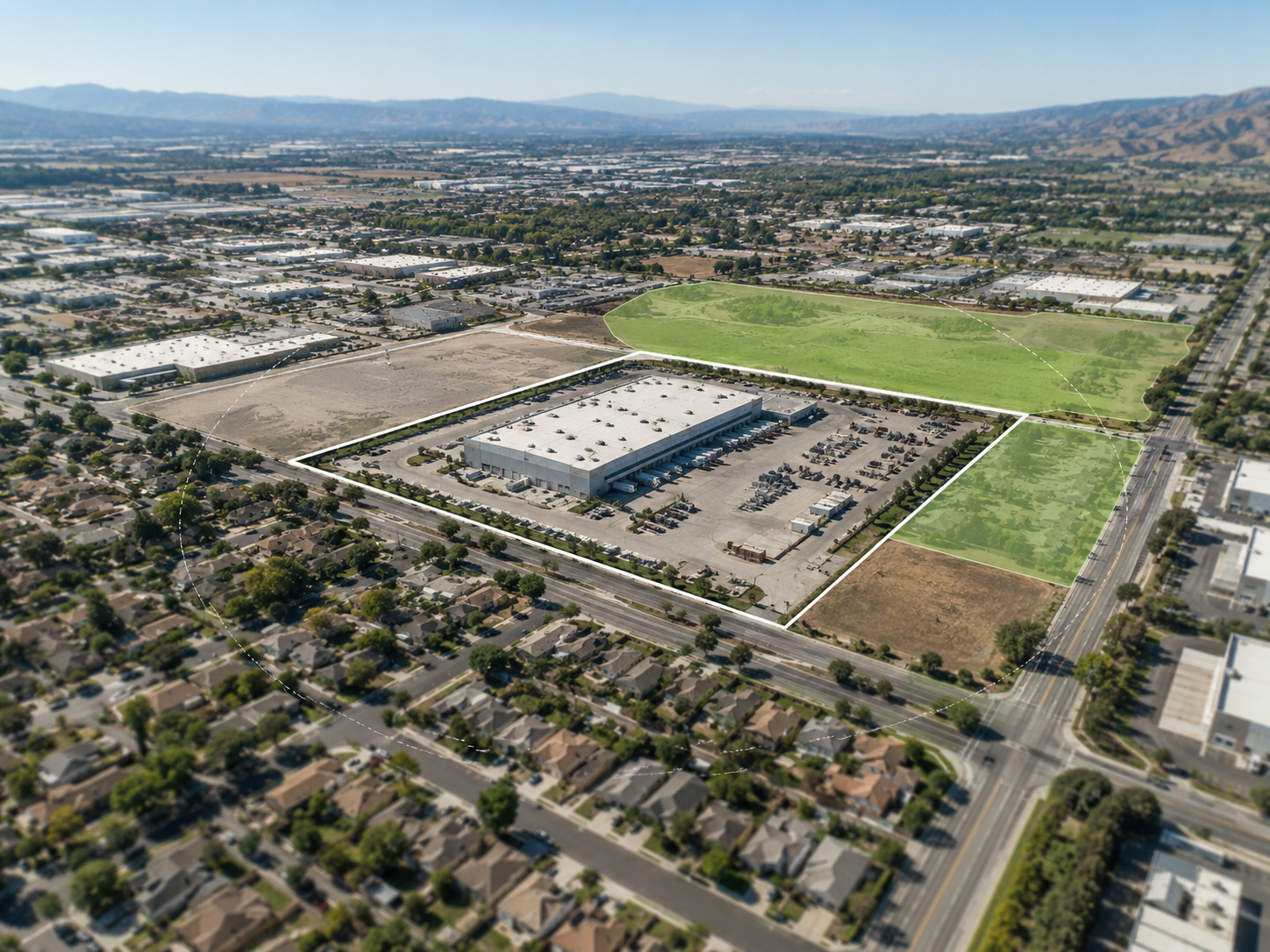
Zoning is a parcel-based instrument. Drone delivery is a radius-based entitlement. A public hearing notice reaches owners within a few hundred feet of the site. A 7.5-mile service radius covers roughly 176 square miles, several thousand times the size of the noticed area. The population that receives legal notice and the population that experiences the impact barely overlap.


The land use process assumes notice precedes impact. Here, impact precedes awareness. The opposition constituency is not assembled before the vote by certified mail. It is assembled after the vote, by operations, at a moment when the entitlement is already legally unassailable.

What that does to your allies

A council member who voted yes and cannot vote no again retains one instrument: public criticism of the applicant. Approval turns your supporters into your most motivated critics, because expressing frustration is the only authority they have left. In Richardson, Amazon raised the minimum altitude for outbound flights to an average of 225 feet and rerouted traffic over commercial land (Zeff, "Richardson City Council"). These were real concessions, made after the vote, that bought compliance rather than support.


Note what the city could still enforce. The zoning change capped delivery hours from 7 a.m. to 8 p.m. (Zeff, "Richardson Residents"). That single condition, written into the approval, outperformed every letter the city sent afterward.

Winners and losers

Local winners: industrial and flex landlords whose sites are deeply separated from housing, a feature increasingly priced. Cities that define use before the first application, because leverage exists only before rights vest. Second wave jurisdictions that write conditions from another city's complaint log.


Local losers: the first city in a region to say yes, whose council absorbs the learning curve in public. Residents under the corridor, who bear the impact but have no permit to appeal. The next applicant in that jurisdiction, because when a lightly reviewed approval produces a loud surprise, the legislative response is never narrow. Notice radii widen, use tables tighten, and a housing project two years later pays for a drone hub's noise complaints.


There is also a fiscal consequence that nobody models. In Richardson, a homeowners association president told the council that neighbors were considering protesting their home appraisals (Zeff, "Richardson City Council"). A city that books a delivery hub as an economic development win may find that part of the cost returns as a soft spot in its tax base.

What to do about it

Underwrite the radius, not the parcel. Before site control, map the corridor: which neighborhoods, which associations with covenant authority, which council districts, which schools and parks. Size political diligence to the service area, not the notice area.


Volunteer conditions while you still have something to trade. Hours, altitude floors, routing commitments, a published complaint line with a response standard. Offered at the hearing, these win votes and credit. Extracted later, they win nothing.


Build the record you will need at the federal level. Every new site still clears FAA review and public comment. A city with a thick complaint file and no relationship with you will use it.


If you build anything else in these markets, watch the ordinances being drafted right now. Reactive codes are written broadly.

The bottom line

Cities will not win jurisdiction over the sky. They will use every tool they still hold, with the intensity of officials surprised in front of their own constituents. Legal validity does not solve that. Sequencing does.

Land Use Strategies has spent three decades building public and political support to get projects approved and keep them running afterward. If you are siting aerial logistics infrastructure or building in a city that just learned it cannot regulate its own airspace, we should talk.

Works Cited


Amazon. "Amazon Prime Air Drone Delivery Expands to Nearly 500 US Cities and Towns by 2026." About Amazon, 19 Aug. 2026, www.aboutamazon.com/news/transportation/amazon-prime-air-drone-delivery-expansion.


Palmer, Annie. "Amazon to Expand Drone Service to Nearly 500 Cities after Targeting 1 Million Deliveries This Year." CNBC, 19 Aug. 2026, www.cnbc.com/2026/08/19/amazon-plans-drone-expansion-as-top-exec-projects-1-million-deliveries.html.


Zeff, Isabella. "Richardson City Council Will Not Pursue Amazon Rezoning after Drone Complaints." Community Impact, 14 Apr. 2026, communityimpact.com/richardson/government/richardson-city-council-will-not-pursue-amazon-rezoning-after-drone-complaints/.


Zeff, Isabella. "Richardson Residents Voice Concern about Amazon Delivery Drone Noise, Frequency." Community Impact, 13 Feb. 2026, communityimpact.com/richardson/government/richardson-residents-voice-concern-about-amazon-delivery-drone-noise-frequency/.

Recent Posts

by Land Use Strategies 20 August 2026
For years, developers have treated community engagement as a part of the entitlement process. Pennsylvania has just moved it much closer to the front of the line.

by Land Use Strategies 12 August 2026
Reuters reported this week that the banks financing the U.S. data center boom have added a line to their diligence checklists: political and community opposition. Karen Fang, who runs infrastructure and sustainable finance at Bank of America, told Reuters she looks at two things: project readiness and credit quality. She defined readiness as the permits and approvals a project needs, plus the support of the people who will live around it. Research firm Data Center Watch counted at least 75 projects worth roughly $130 billion facing local opposition in the first quarter of 2026 alone.
by Land Use Strategies 3 August 2026
Beyond the Check: How to Turn a Community Benefits Agreement Into a Community "Yes"

What BP's Big Bronco solar project in Adams County actually teaches developers about winning entitle
by Land Use Strategies 21 July 2026
BP's Lightsource bp is moving its Big Bronco solar-and-storage project forward in Adams County, Colorado. The project totals roughly 300 megawatts of solar paired with 300 megawatts of battery storage and is backed by a reported $675 million in private investment. Public figures estimate $39 million in new local tax revenue and about 400 jobs at peak construction. By most accounts, it has been a smooth ride: willing landowners, a site that steers clear of sensitive areas, and little of the organized community opposition that stalls so many energy projects.

by Land Use Strategies 7 July 2026
In Central Oregon, the Deschutes River lives two lives. The stretch through Bend looks healthy. A mile or two downstream, roughly ninety percent of it vanishes into pipes and canals. A recent investigation by OPB and ProPublica followed the water to determine where it goes and who benefits.

Row of brick townhouses along a quiet street with parked cars and a vacant lot at the end
by Land Use Strategies 2 July 2026
In Lawrenceville, a developer plans to build 15 apartments on a 3,300-square-foot lot on 49th Street, next to Stinky's Bar and across from the Locomotive Lofts. It's tiny by headline-making standards, yet it now faces a formal protest before Pittsburgh's Zoning Board of Adjustment, backed by a neighborhood attorney, a
by Land Use Strategies 24 June 2026
What Arizona’s development battles reveal about the opposition every developer is about to face.
Partially built concrete building on a construction site under cloudy skies, with city buildings nearby
by Land Use Strategies 15 June 2026
The Denver demolition debate isn’t really about wrecking balls. It’s about who bears the political risk of a vacant lot, and that’s a question developers must answer before the first permit.
by Land Use Strategies 10 June 2026
Arizona’s Senate has advanced a bill that would let small modular nuclear reactors be sited next to data centers and on retired coal sites across the state’s rural counties.
by Land Use Strategies 5 June 2026
Across the country, data center developers are learning a hard lesson the rest of the land use world internalized decades ago.
Show More